
Artist-in-Residence: Dakota Mace

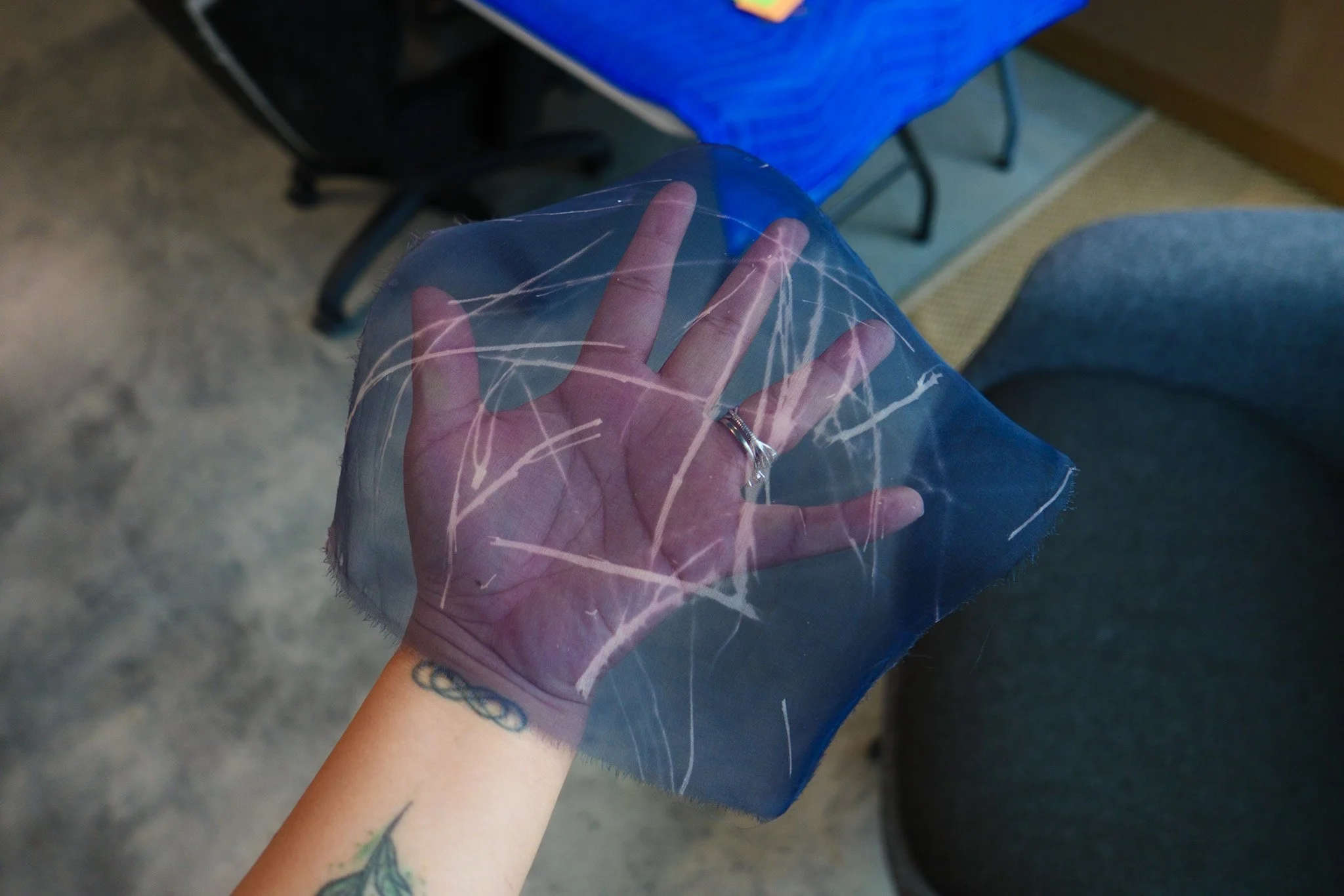
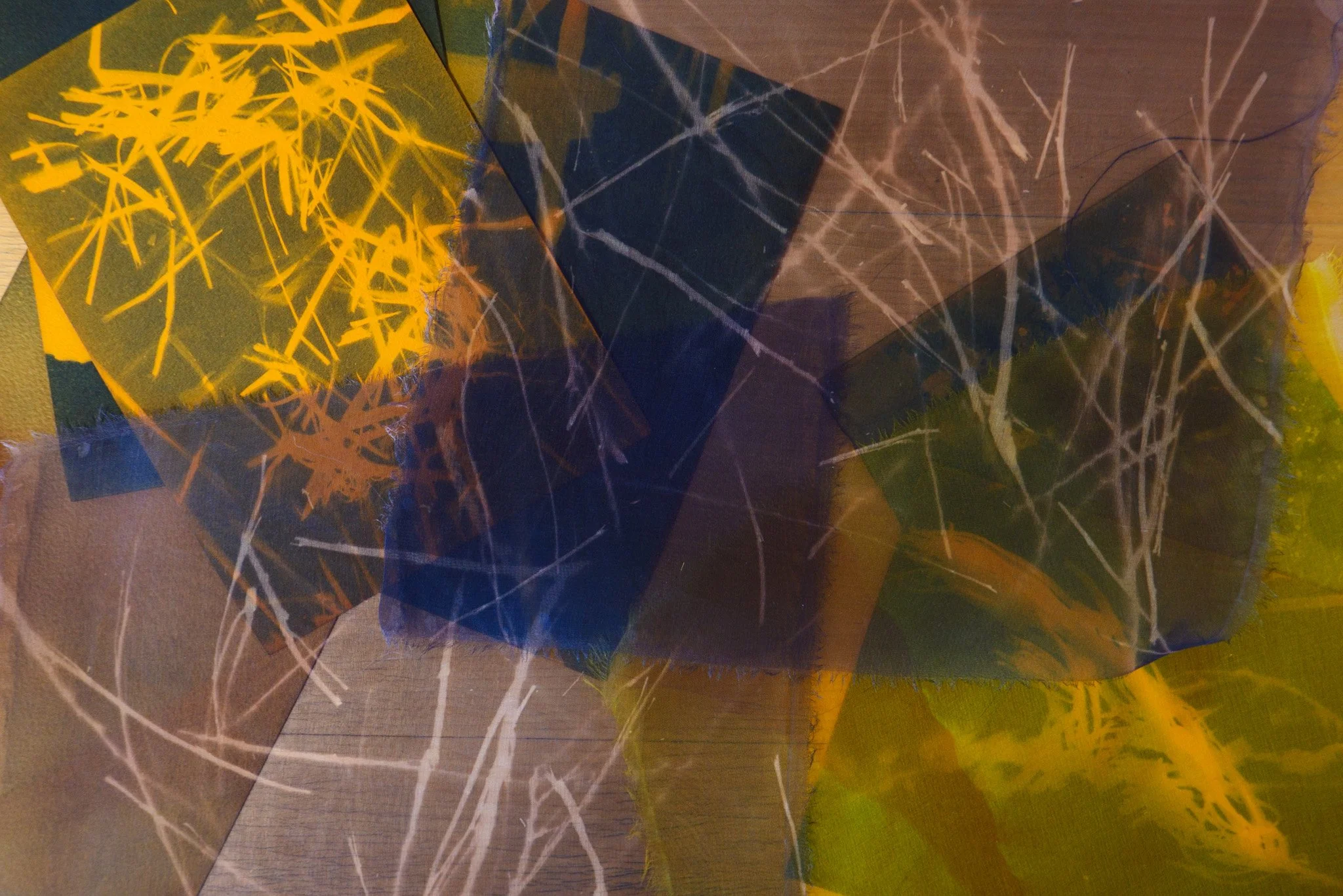
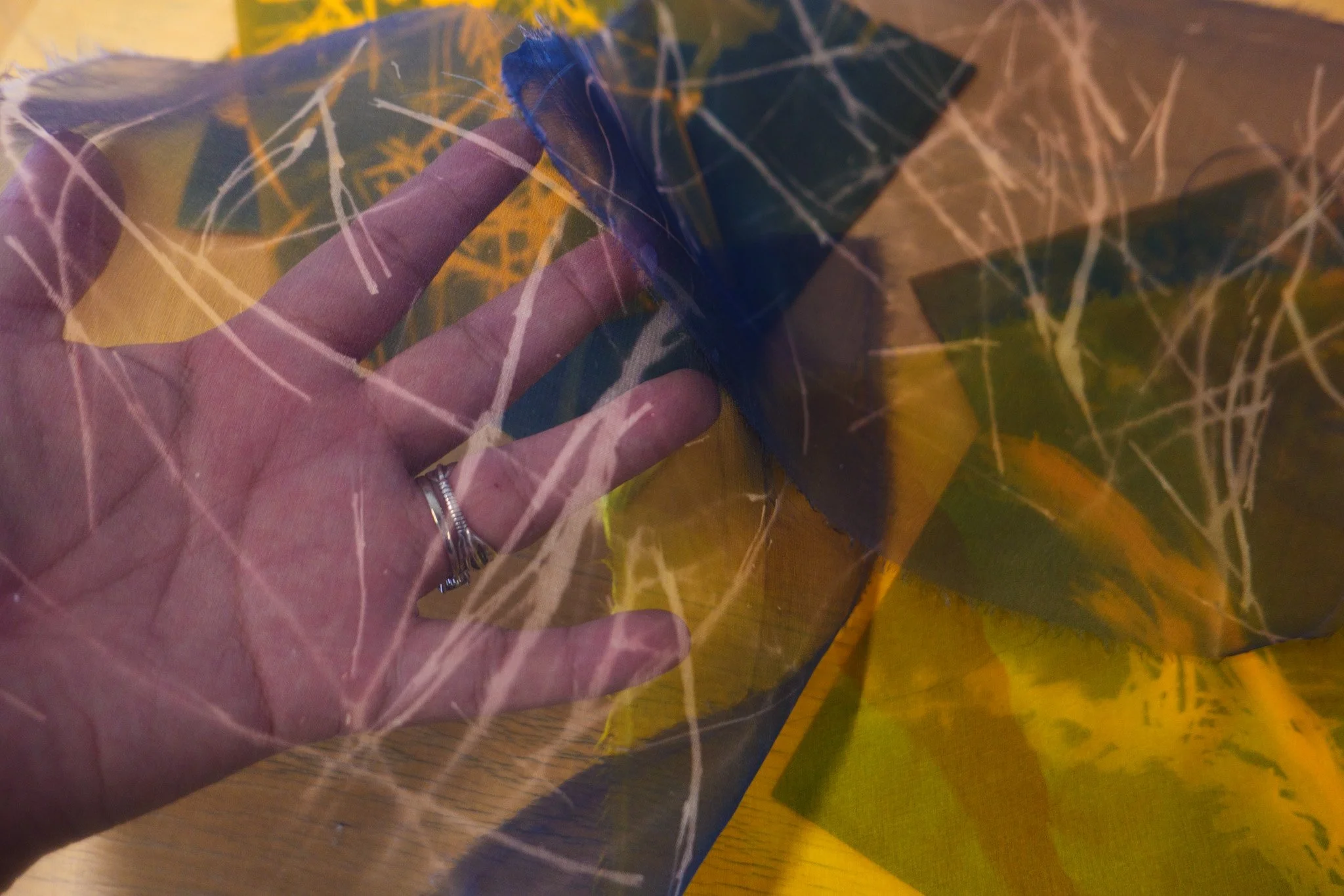
Dakota Mace and detail images from her ongoing drop-in community art project, Shímásání Bila’ (My Grandmother’s Hand)
TAC is honored to welcome Dakota Mace (Diné) as our Artist-in-Residence January through June 2026.
Dakota Mace is an interdisciplinary artist who specializes in translating Diné history and beliefs through her work. She earned her MA and MFA in Photography and Textile Design at the University of Wisconsin–Madison and holds a BFA in Photography from the Institute of American Indian Arts. Drawing on her Diné (Navajo) heritage, her work explores themes of family lineage, community, and identity while inviting viewers to deepen their understanding of Diné culture through alternative photography, weaving, beadwork, and papermaking.
Mace has collaborated with numerous institutions and programs to promote dialogue about cultural appropriation and the significance of Indigenous design. She serves as faculty in the MFA Studio Arts program at the Institute of American Indian Arts and works as a photographer for both the Helen Louise Allen Textile Center and the Center for Design and Material Culture. Her work is held in major collections including the Library of Congress, the Whitney Museum of American Art, the National Gallery of Art, the Everson Museum of Art, the Amon Carter Museum, and the Museum of Contemporary Photography, among others.
At TAC, Mace is engaging deeply with Indigenous textile traditions in Wisconsin—particularly quilting and finger weaving—while developing new collaborative works rooted in community, memory, and shared making.
TAC’s Artist-in-Residence program is funded through grants from Ruth Foundation for the Arts and Endres Manufacturing Company Foundation.
Community Engagement at TAC
Mace’s residency includes public programming designed to create space for learning, making, and connection across Indigenous and non-Indigenous communities. These offerings emphasize women-led traditions, sustainable practices, and living Indigenous textile knowledge.
Planned programs include:
A drop-in community art project, open to all who visit TAC starting in mid-February and running through June 2026. On announced dates, Mace will be at TAC meeting visitors and facilitating the project. See calendar of programs below.
Hands-on workshops that invite deeper understanding of and participation in Indigenous textile traditions to be held March through May 2026. See calendar of programs below.
A public artist talk sharing insights from the residency, research, and community collaborations. Date to be announced.
A 2027 exhibition highlighting Indigenous makers from across Wisconsin, with possible collaboration with Little Eagle Arts Foundation. Dates to be announced.
Ongoing Drop-In Community Art Project: Shímásání Bila’ (My Grandmother’s Hand)
Beginning mid-February and continuing through June, visitors to TAC are invited to participate in Shímásání Bila’, a collaborative, evolving artwork located in TAC’s lobby.
Visitors are encouraged to bring in items from their surroundings or home to create a photogram by placing objects on top of fabric treated with UV-sensitive Solar Fast dye. Objects can include items from their surroundings, such as plants, fauna, and found materials, or personal objects that evoke memories or stories about their mother, grandmother, aunt, sister, or daughter. The aim is to highlight both the importance of creating with our hands and the memories these objects hold.
Participants place their meaningful objects on top of 10" x 10" fabric panels and expose them to sunlight to create an “image” of the object on the fabric.
While the fabric develops, participants are encouraged to write a brief memory or story about a mother, grandmother, aunt, sister, or daughter. These reflections will gradually become part of the larger installation.
Each participant creates two pieces:
One silk organza square that becomes part of a growing community quilt honoring matriarchs and memory.
One muslin piece to take home as a personal keepsake.
Over time, these layered contributions will form a collective artwork that embodies Mace’s research into palimpsest places—spaces where time, memory, and stories overlap and persist.
This project is open to all ages and experience levels. No prior art experience is needed—just curiosity and care.
Calendar of Programs
Sunday, February 22, 11am-2pm: TAC Community Day
Mace will be at TAC during the TAC Community Day event to meet visitors and facilitate the community art project, Shímásání Bila’ (My Grandmother’s Hand).Sunday, March 22, 1-3:30pm: Ho-Chunk Quilting & Appliqué Workshop
Led by guest teaching artist Molli A. Pauliot, this program will include a presentation on the cultural significance of Ho-Chunk quilting followed by a hands-on appliqué activity grounded in traditional principles and contemporary practice. Workshop fee is $30, and advance registration is required. Native individuals with tribal affiliations are invited to attend for free; email elizabeth@textileartsmadison.org for details.Saturday, April 18, 11am-2pm
Mace will be at TAC during the TAC Community Day event to meet visitors and facilitate the community art project, Shímásání Bila’ (My Grandmother’s Hand).Thursdays, April 23 and April 30, 6–8pm: Finger Weaving Workshop
Led by guest teaching artist Jennifer White Eagle, this workshop will demonstrate traditional finger weaving and guide participants in creating a simple finger-woven band. Participants will learn foundational techniques while hearing about the cultural context of this practice. Workshop fee is $30, and advance registration is required. REGISTER ONLINE NOW. Native individuals with tribal affiliations are invited to attend for free; email elizabeth@textileartsmadison.org for details.Saturday, May 16, 9am-4pm: Star Quilt Tote Bag
Led by guest teaching artist Jasmyne Tayler Collins, this workshop will share with participants the background and cultural significance of star quilts, then lead participants in the technique of creating a pieced star pattern panel and constructing the panel into a tote bag. REGISTER ONLINE NOW.Native individuals with tribal affiliations are invited to attend for free; email elizabeth@textileartsmadison.org for details.Sunday, May 17, 1-4pm: Bark Tanning Sheepskin with Driftless Tannery
This tanning workshop, offered in collaboration with Driftless Tannery of Argyle, WI, will cover how bark tanning supports sustainable textile practices that are no longer accessible. The session will include a talk and demonstration, and cover the importance of sustainable tanning processes, women-focused businesses within craft fields, and supporting Indigenous land movements. REGISTER ONLINE NOW.Native individuals with tribal affiliations are invited to attend for free; email elizabeth@textileartsmadison.org for details.Thursday, May 21, 12-3pm
Mace will be at TAC during the TAC public gallery hours to meet visitors and facilitate the community art project, Shímásání Bila’ (My Grandmother’s Hand).Saturday, June 13, 1-3:30pm:Ho-Chunk Quilting & Appliqué Workshop
A second-session of this popular March workshop will be led by guest teaching artist Molli A. Pauliot. This program will include a presentation on the cultural significance of Ho-Chunk quilting followed by a hands-on appliqué activity grounded in traditional principles and contemporary practice. Workshop fee is $30, and advance registration is required. Native individuals with tribal affiliations are invited to attend for free; email elizabeth@textileartsmadison.org for details. REGISTER ONLINE NOW.